 Hot Topic
10 Unique Army Uniforms Around The World You Need To See!

Military uniforms do more than distinguish soldiers on the battlefield—they encapsulate centuries of history, national identity, and cultural pride.
From the flamboyant Renaissance-inspired attire of the Vatican's Swiss Guard to the sleek, modern camouflage of Japan's Self-Defense Forces, each uniform tells a story about a nation's values and traditions.
We'll tour ten of the world's unique army uniforms, exploring the design features, practical functions, and rich cultural symbolism that make them stand out.
adv_slot_container
1. The British Royal Guard: Scarlet Splendor
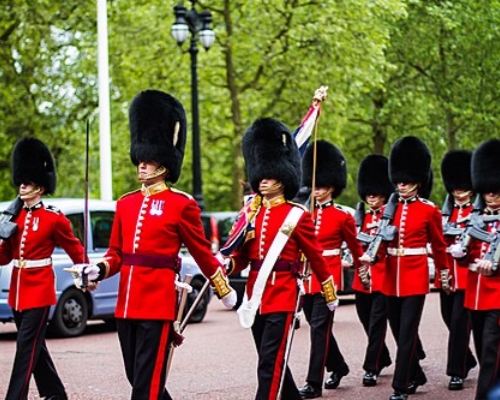
Iconic Features: Bright red tunics, towering bearskin hats.
You've probably seen them standing stoically outside Buckingham Palace. The British Royal Guard's uniform is a masterpiece of tradition.
The red color, once practical for hiding bloodstains in battle, now symbolizes royal authority. The bearskin hats—each made from the fur of a single bear—date back to Napoleon's era, mimicking the intimidating headgear of French Grenadiers.
While ceremonial today, the uniform's crisp tailoring and gold accents reflect Britain's unshakable link to its imperial past.
adv_slot_container
2. French Foreign Legion: Rugged Minimalism
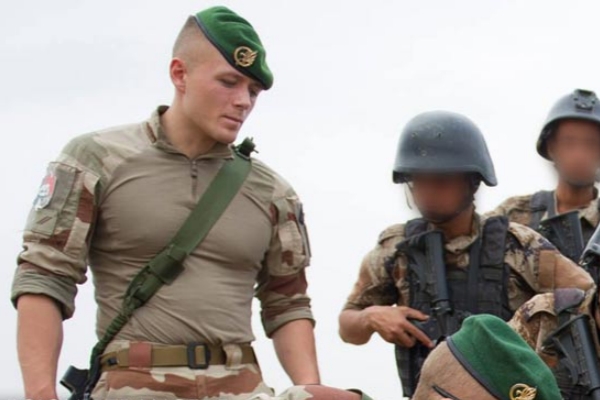
Iconic Features: White parade uniforms, green berets.
Founded in 1831 for foreign volunteers, the Legion's stark white "tenue de tradition" contrasts with its gritty reputation. The white symbolizes purity and renewal, while the green beret nods to its elite status.
What's fascinating? Legionnaires earn the right to wear the beret only after completing brutal training. The uniform's simplicity mirrors the Legion's motto: "Legio Patria Nostra" (The Legion is our Homeland)—a brotherhood transcending nationality.
3. Swiss Guard: A Renaissance Masterpiece
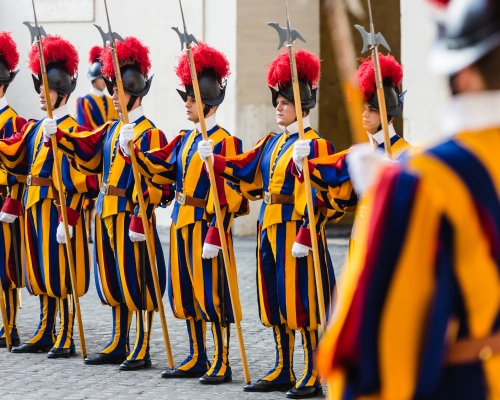
Iconic Features: Striped blue-red-yellow tunics, plumed helmets.
Protecting the Pope since 1506, the Swiss Guard's uniform is a living museum piece. Designed by a 20th-century commander but inspired by 16th-century art, its bold stripes and metallic helmet evoke Michelangelo's era.
Each tailor-made uniform features 154 pieces, symbolizing the 189 guardsmen's sacred duty. The halberd (a pole weapon) they carry isn't just decorative—it's a reminder of their dual role as ceremonial sentinels and trained combatants.
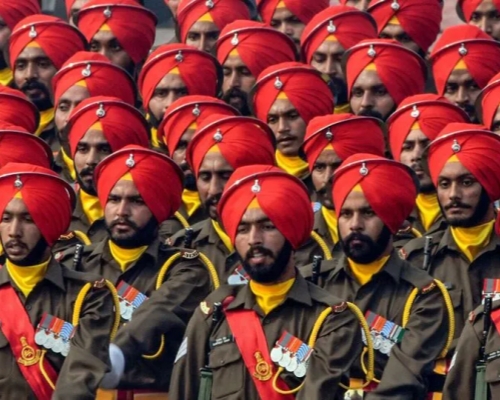
4. Indian Sikh Regiment: Turbans of Valor
Iconic Features: Vibrant saffron turbans, ceremonial daggers.
India's Sikh soldiers stand out with their "pagri" (turban), a religious symbol representing honor and equality. The regiment's bright orange or blue uniforms pay homage to Sikh warrior traditions dating back to the Mughal Empire. Even modern combat gear accommodates uncut hair and turbans, blending faith with duty. Their battle cry—"Bole So Nihal!" (Victory to the righteous)—echoes their unyielding spirit.
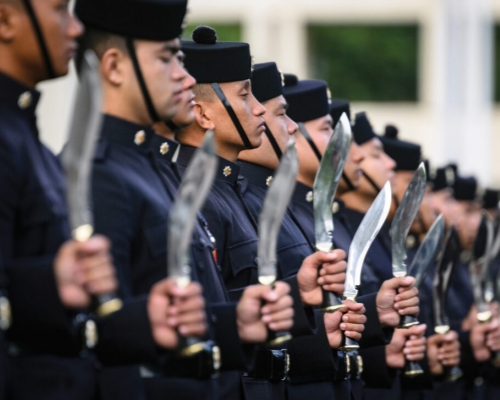
5. Nepalese Gurkha Regiment: The Kukri's Legacy
Iconic Features: Wide-brimmed hats, curved kukri knives.
Famed for their bravery, Gurkha soldiers wear a unique slouch hat tilted to the right—a style adopted from 19th-century British colonial forces. But the real star is the kukri, a lethal knife symbolizing their motto: "Better to die than be a coward." Their olive-green combat uniforms subtly incorporate traditional patterns, bridging Nepal's Himalayan heritage with modern warfare.
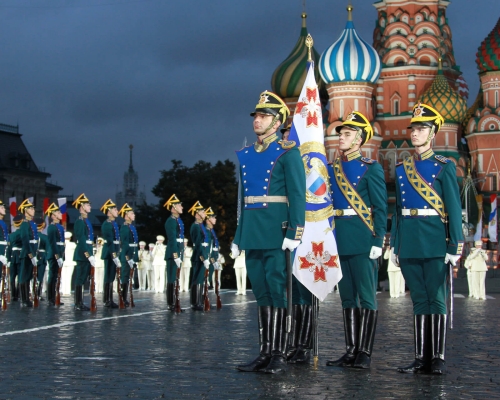
6. Russian Presidential Guard: Tsarist Grandeur Revived
Iconic Features: Cobalt-blue coats, gold epaulettes.
The Kremlin's guards wear uniforms that could rival a tsar's wardrobe. Reintroduced in the 2000s, their blue-and-gold attire harks back to Imperial Russia, with double-breasted jackets and polished boots. The hexagonal "papakha" (fur hat) adds a touch of winter grandeur. While criticized as ostentatious, the design underscores Putin's push to revive Russia's historical might.
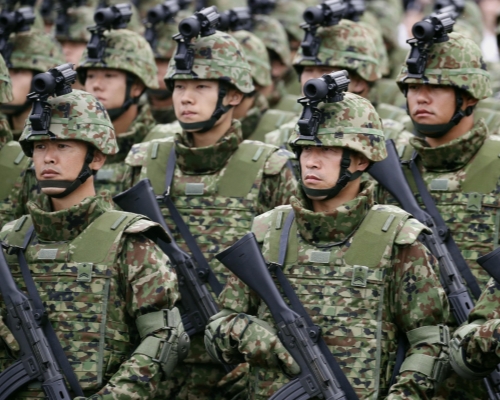
7. Japanese Self-Defense Forces: Futuristic Functionality
Iconic Features: Sleek gray-blue fatigues, modular gear.
Post-WWII Japan reimagined its military identity with minimalist, tech-forward uniforms. The JSDF's gear emphasizes mobility and camouflage, using moisture-wicking fabrics for its disaster-response missions. Even their dress uniforms—navy suits with gold trim—avoid imperial-era designs, reflecting Japan's pacifist ethos. A far cry from samurai armor, yet equally symbolic of national values.
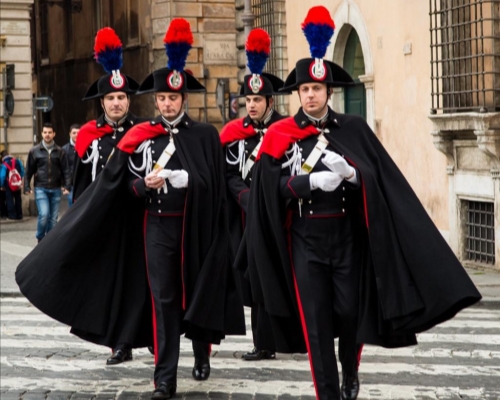
8. Italian Carabinieri: Elegance in Enforcement
Iconic Features: Black uniforms with crimson stripes, cocked hats.
Italy's military police blend la dolce vita with law enforcement. Their 19th-century-inspired uniform features a "lucerna" hat tilted at a rakish angle and a sword for formal events. The red stripe running down the trousers? It honors soldiers who died in World War I. Whether patrolling piazzas or performing horseback ceremonies, the Carabinieri prove that authority can be stylish.
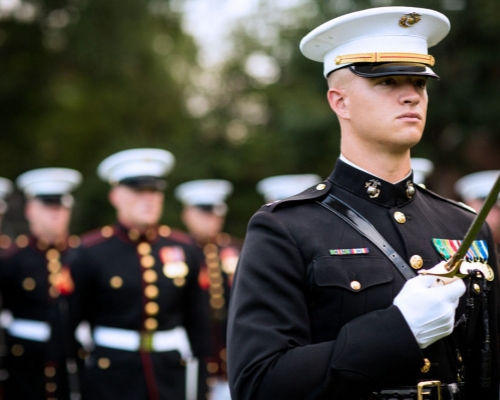
9. U.S. Marine Corps: Dress Blues & Brotherhood
Iconic Features: Navy-blue coats, white “barracks” covers.
The Marines' dress uniform is synonymous with American pride. Adopted in 1912, its high collar and blood stripes (red lines on trousers) commemorate fallen heroes. Every detail matters: the eagle-globe-anchor insignia represents global service, while the white hat symbolizes purity of purpose. As one Marine put it: "When you wear this, you're not just a soldier—you're history."
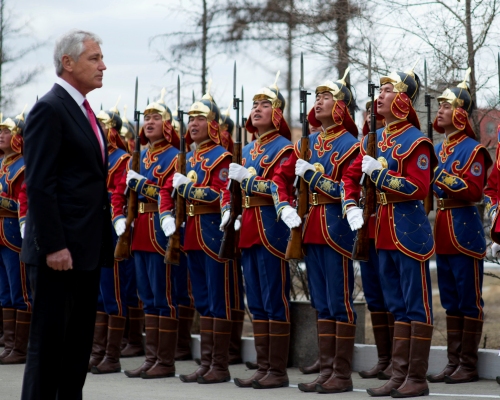
10. Mongolian Cavalry: Nomadic Warriors Reimagined
Iconic Features: Deel robes with camouflage, fur-lined boots.
Mongolia's cavalry modernizes Genghis Khan's legacy. Their olive-green deel (traditional robe) features military patches and thermal lining for -40°C winters. The signature "malgai" hat, adorned with horsehair, nods to nomadic roots. Riding alongside armored vehicles, these soldiers embody Mongolia's mantra: "Respect the past, defend the future."
Conclusion
From the Vatican's striped tunics to the Gurkhas' deadly kukris, these uniforms tell stories of courage, faith, and national identity. They remind us that even in an age of drones and AI, human history is woven into every thread. Which design captivated you the most? Share your thoughts—and keep an eye out for these iconic styles in parades, films, or history books. After all, a uniform isn't just cloth; it's a nation's soul in fabric form. 🎖️✨


RECOMMEND ARTICLES
What Does Your Eye Shape Say About Your Personality?
✋ Palm Reading: What Will Happen In Your Future?
Touch The Birthstone To See What's The Life Awaits You?
Discover Your Birth Runes: What Do They Really Mean?

Rare Or Common? The Truth About Your Name In 2025

The Hidden Meanings Behind Your Birthmark: What Do They Really Signify?

Decoding The Birth Tree: What It Really Reveals About You!
Cats And Emotional Well-being: How They Shape Our Lives!
Top 8 AI Photo Effects Of 2025: Which One Will You Choose?
10 Women Of The Bible Who Shaped Faith And Courage!
Most Read

How To Play And Improve At Arrows – Puzzle Escape: Test And Boost Your Memory Skills

Take The FaceZone Filter Test To See How Others See You

My Family Chose My Sister Now They Want What I Built!
Typical Signs That Your Home Might Have A Ghost!

Decoding 10 Spirit Messengers: Are These Animals Trying To Tell You Something?